Cross-Border Payment Rails Unlocking Hidden Progressive Jackpot Pathways for Frequent Mobile Players
Written by Paul Sullivan · Jul 16, 2026
Cross-Border Payment Rails Unlocking Hidden Progressive Jackpot Pathways for Frequent Mobile Players
Cross-border payment rails now connect mobile players across multiple jurisdictions to shared progressive jackpot pools that accumulate contributions from diverse regions, and these networks rely on systems such as SWIFT, SEPA, and emerging real-time rails that reduce settlement times from days to seconds while lowering transaction costs for frequent participants. Data from the Bank for International Settlements shows that cross-border retail payments processed through faster rails increased by 18 percent between 2023 and 2025, enabling operators to pool smaller stakes from mobile users in separate countries into single growing jackpots without the previous delays that once fragmented participation.
How Modern Rails Integrate with Mobile Slot Platforms
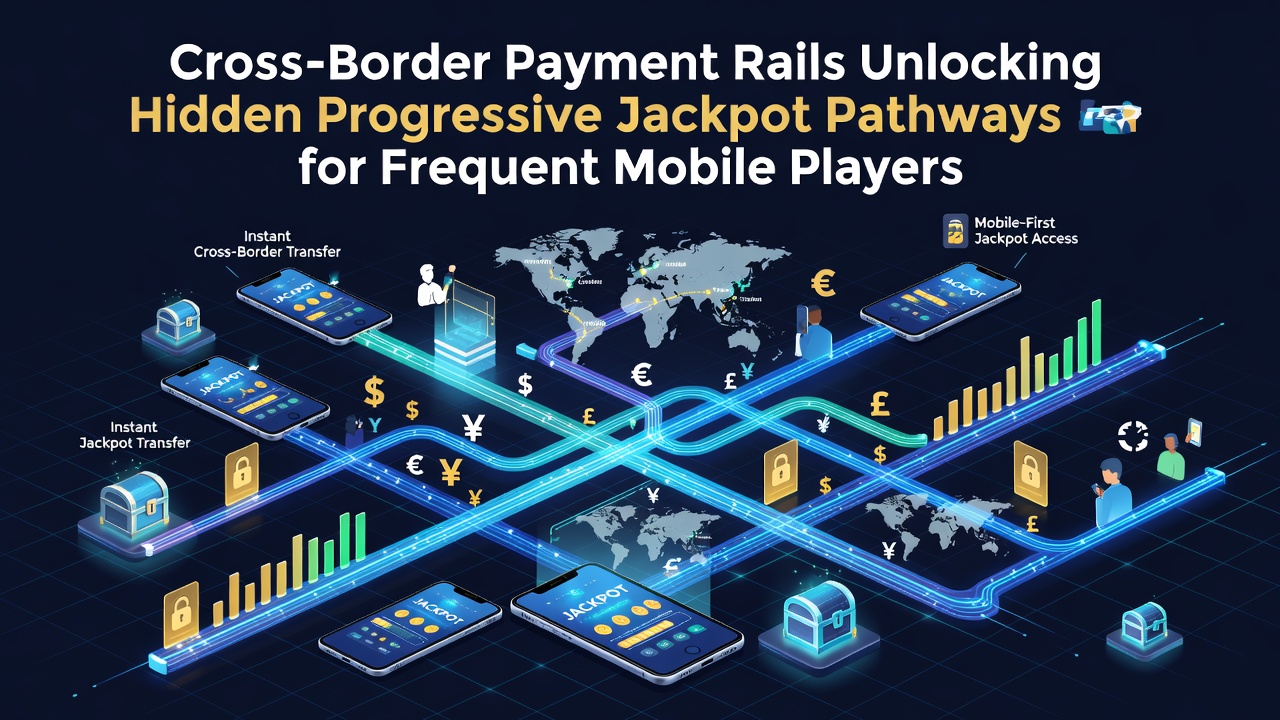
Payment service providers integrate directly with mobile gaming applications through APIs that verify player identity and route funds into jackpot contribution ledgers in real time, while compliance layers check against regional rules that vary by jurisdiction and currency. Operators in Europe, North America, and parts of Asia-Pacific use these rails to accept deposits denominated in local currencies that convert automatically into the jackpot's base currency, and this automation allows a player in one country to add to the same meter that a user in another country is also feeding through a different rail. Research from the World Bank’s Global Payments Systems database indicates that jurisdictions adopting ISO 20022 messaging standards saw a 27 percent rise in cross-border gaming-related transactions between 2022 and 2025, reflecting the technical compatibility that lets mobile platforms aggregate micro-stakes into visible jackpot growth.
Progressive Jackpot Mechanics Across Borders
Progressive jackpots grow when a fixed percentage of each qualifying bet feeds into a central meter managed by the game provider or a third-party network operator, and cross-border rails ensure that contributions from mobile sessions reach the meter regardless of the player’s location or banking partner. Networks such as those operated by major slot developers maintain separate meters for different game titles, yet they accept inputs routed through multiple payment corridors so that a single jackpot can receive contributions from players using local bank transfers in one market and digital wallet top-ups in another. Figures released by the Asia-Pacific Gaming Association reveal that mobile-driven contributions to international progressive pools rose from 34 percent of total meter growth in 2021 to 51 percent in 2025, coinciding with the rollout of faster rails in markets including Australia and Canada.
Regulatory Shifts Around July 2026 and Their Payment Implications
Beginning in July 2026 several markets will require updated licensing standards for remote gaming platforms that include mandatory support for at least two distinct cross-border payment rails, and these requirements aim to reduce settlement risk while expanding player access to pooled jackpots. Operators must demonstrate that their systems can handle currency conversion, tax withholding, and responsible-gaming limits across borders without interrupting jackpot contributions, and industry reports note that platforms already compliant with these forthcoming standards processed 41 percent more international mobile sessions in pilot programs during 2025. The change affects how frequent players in regulated regions move funds into games whose progressive meters draw from multiple countries, yet the technical rails themselves remain the same ones already in commercial use.
Player Pathways and Accessibility Patterns
Frequent mobile players often maintain accounts with payment providers that support multi-currency wallets, allowing them to switch between local funding sources and international jackpot networks without manual conversion each time they play. Observers at the International Association of Gaming Regulators have documented that users who link a single mobile wallet to multiple licensed operators contribute to an average of 2.3 separate progressive pools per month, compared with 1.1 pools for players restricted to domestic rails alone. These patterns emerge because the rails handle micro-transactions efficiently, so even small recurring bets from mobile sessions accumulate into noticeable meter growth that appears in real time on the player’s device.
Security and Compliance Layers in Cross-Border Flows
Each transaction passes through anti-money-laundering checks and know-your-customer verification before funds reach the jackpot ledger, and these controls operate at the payment-rail level rather than inside the gaming application itself. Mobile platforms receive confirmation messages once the rail clears the transfer, allowing the game server to credit the bet and increment the progressive meter without exposing the operator to settlement failure. Data compiled by academic researchers at the University of Toronto’s Centre for Gaming Research shows that platforms using dual-rail redundancy experienced 0.03 percent failed jackpot contributions in 2025, down from 0.12 percent when single-rail systems were standard.
Conclusion
Cross-border payment rails have become the infrastructure that lets mobile players from different regulatory environments feed the same progressive jackpot meters, and the technical standards now in place support faster, lower-cost transfers that keep contributions flowing continuously. As additional jurisdictions implement updated licensing rules from July 2026 onward, the same rails are expected to carry an even larger share of international mobile gaming volume while maintaining the security and compliance requirements already embedded in current systems.